• TDI Deco Procedures

TDI Deco Procedures

No-decompression limits define the ceiling of sport diving. The TDI Decompression Procedures course takes you past that ceiling. With a maximum operating depth of 150 feet (45 metres), this course qualifies you to plan and execute staged decompression dives where you stop and off-gas on the way up rather than ascending directly to the surface. Topics include decompression gas choices, dive planning with tables and computers, gas switching, SMB and lift bag deployment, omitted decompression contingencies, catastrophic gas loss procedures, and equipment considerations for deco diving. Paired with TDI Advanced Nitrox, this course forms the foundation of the entire technical diving curriculum. Minimum certification: SDI Advanced Adventure Diver or equivalent. Minimum age 18. 25 logged dives required.


Students must own their own mask, fins, and boots for this course.

All students receive a discount on product purchases during enrollment of any one of our courses!


Have Classwallet/ESA funds? Click Here.

Are you a Veteran with a GI Bill? Click here.


Starting from
$599.00

Availability: Contact us for booking information

TDI Decompression Procedures Course


Every recreational dive ends the same way: you watch your no-decompression limit, and when time runs short you ascend. The bottom time you had was the bottom time you got. Planned decompression diving changes that equation. Instead of ascending when your NDL expires, you follow a staged ascent with planned stops at specific depths to off-gas safely before surfacing. The dive lasts as long as the dive needs to last.

The TDI Decompression Procedures course is the certification that makes that possible. With a maximum operating depth of 150 feet (45 metres), it is the first course that takes you past sport diving limits and into the technical diving environment. Combined with TDI Advanced Nitrox, it forms the foundation of every other technical course in the TDI curriculum. Most divers do both together, and for good reason, they were designed to work as a pair.


Who This Course Is For


  • Advanced divers who have hit their no-decompression limits and want more bottom time
  • Divers pursuing the technical track who need Decompression Procedures as a foundation course
  • Photographers, scientists, and working divers whose dives require extended bottom time


What the Course Covers


Decompression Dive Planning

Planning a decompression dive is fundamentally different from planning a recreational one. You are not just tracking your NDL -- you are planning specific stop depths, stop times, and gas requirements for the ascent itself. The course covers how to choose decompression gases for different dive profiles, how to use dive tables and personal dive computers for deco planning, and how to build contingency plans for equipment failure and omitted decompression. Omitted decompression -- surfacing without completing planned deco stops -- is a specific emergency scenario with real DCS risk, and the course addresses it directly with a response protocol.

Equipment for Decompression Diving

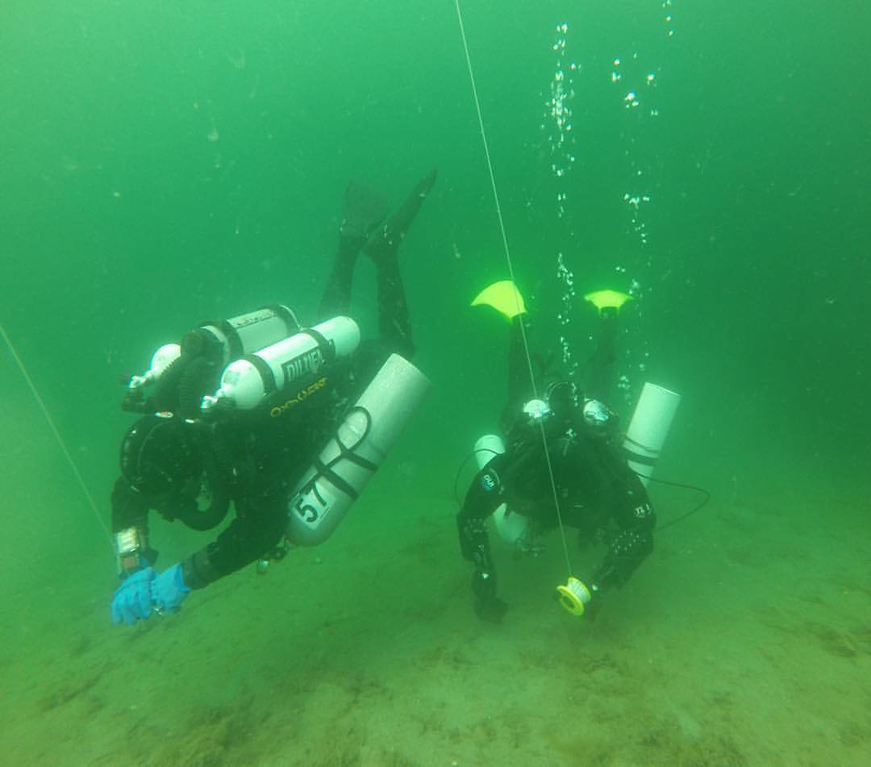
Deco diving requires equipment beyond a standard recreational setup. The course covers equipment selection for staged decompression, cylinder labeling and gas analysis for deco gases, an introduction to gas blending procedures, and pre-dive checks and drills specific to technical configurations. Stress analysis and mitigation is also covered -- recognizing and managing stress in yourself and your team before and during a technical dive is a skill, not just an attitude.

Decompression Procedures In the Water

Following a decompression schedule underwater requires precision that recreational diving does not demand. The course covers how to track your deco obligation in real time, how to execute gas switches at depth between your back gas and deco gases, team awareness and communication protocols during a deco dive, and SMB and lift bag deployment from depth to signal your position during the ascent. Proper trim, buoyancy, and finning technique are also covered to the standard required for technical diving.

Emergency Procedures

Technical diving emergency procedures cover scenarios that recreational training does not address. The course covers responses to equipment failure at depth, catastrophic gas loss from a primary cylinder, omitted decompression and in-water recompression considerations, and navigational errors during a deco dive. These procedures are practiced until they are automatic, because a technical emergency is not the time to think through the steps.


In-Water Skills


The course includes open water dives with decompression objectives. Required skill demonstrations include:

  • Complete decompression dive plan with gas choices, stop depths, and contingency procedures
  • Pre-dive equipment checks and team S.T.A.R.T. drill
  • Controlled descent and navigation to planned depth
  • Gas management and real-time deco obligation tracking throughout the dive
  • Gas switch execution at planned depth between back gas and deco gas
  • Proper trim, buoyancy control, and finning technique to technical standard
  • SMB deployment from depth during staged ascent
  • Execution of planned decompression stop depths and times on ascent
  • Team communication and buddy awareness throughout
  • Emergency procedure demonstrations as directed by the instructor


What Decompression Procedures Unlocks


Completing TDI Decompression Procedures qualifies you to:

  • Conduct planned staged decompression dives to 150 feet (45 metres)
  • Enroll in TDI Extended Range
  • Enroll in TDI Advanced Wreck
  • Enroll in TDI Trimix courses


Extended Range, Advanced Wreck, and Trimix are each a significant step deeper into the technical diving curriculum. Decompression Procedures and Advanced Nitrox together are the foundation all three build on. Call us at (480) 881-4013 if you want to talk through the full path.


Who Can Enroll


The TDI Decompression Procedures course requires:

  • Minimum age 18
  • Minimum certification of SDI Advanced Adventure Diver, SDI Advanced Diver, or equivalent, confirm your current cert qualifies before enrolling
  • Proof of 25 logged open water dives


Gear and Equipment


Students are required to own their own mask, fins, boots, and snorkel. Technical gear for this course, including stage cylinders, deco regulators, BCDs, and tanks, is available through Dive Arizona. As with all technical courses, owning your own equipment is strongly encouraged. Decompression diving requires familiarity with your gear configuration under pressure, and training on equipment you will actually dive produces significantly better outcomes than learning on a loaner setup. If you need to build or complete a technical kit before this course, stop by the shop and we will help you spec it out. All students enrolled in a course receive a discount on purchases during enrollment.


Frequently Asked Questions


What is the TDI Decompression Procedures course?

The TDI Decompression Procedures course qualifies divers to plan and execute staged decompression dives to a maximum depth of 150 feet (45 metres). It covers decompression gas choices, dive planning with tables and computers, gas switching, SMB deployment, omitted decompression contingencies, catastrophic gas loss procedures, and equipment considerations for deco diving. It is the first TDI course that takes divers past recreational no-decompression limits and is considered the foundation of the technical diving curriculum alongside Advanced Nitrox.

What is planned decompression diving?

In recreational diving, you stay within no-decompression limits and ascend directly to the surface. In planned decompression diving, you intentionally exceed those limits and follow a staged ascent with mandatory stops at specific depths to allow your body to off-gas nitrogen safely before surfacing. The stops, depths, and times are calculated as part of the dive plan before you enter the water.

What is omitted decompression?

Omitted decompression means surfacing without completing your planned decompression stops -- either because of an emergency, equipment failure, or loss of position during the ascent. It creates real decompression sickness (DCS) risk and is one of the specific emergency scenarios the course addresses with a response protocol. Knowing what to do if it happens is part of the certification.

How deep can you dive after TDI Decompression Procedures?

The maximum operating depth for TDI Decompression Procedures certification is 150 feet (45 metres). Deeper technical diving, including TDI Extended Range and Trimix, requires additional certification beyond this course.

What courses does Decompression Procedures unlock?

TDI Decompression Procedures is the prerequisite for TDI Extended Range, TDI Advanced Wreck, and TDI Trimix courses. Together with TDI Advanced Nitrox, it forms the foundation of the entire upper technical diving curriculum. Call us at (480) 881-4013 to discuss which path makes sense for your goals.

Should I take Advanced Nitrox and Decompression Procedures together?

Most divers do, and it is the recommended approach. The two courses are designed to complement each other -- Advanced Nitrox covers high-oxygen gas mixes and physiology, while Decompression Procedures covers planned deco diving. Taking them together builds a complete picture of how technical diving works and prepares you more effectively for what comes next. Call us at (480) 881-4013 to schedule both.


Ready to Go Past Your NDL?


Contact us to schedule the TDI Decompression Procedures course. Call us at (480) 881-4013 or stop by the shop. We are open Monday through Saturday 11am to 6pm and Sunday 11am to 5pm, at 18618 S 186th Way, Queen Creek, inside The Shooting Range.


For more information and to see course standards, click here!

0 reviews for TDI Deco Procedures(Course Group)

Write a review

re-CaptchaCan't read? Reload
top