SDI Sidemount
Specialty Course · Tanks on Your Sides · For Certified Divers
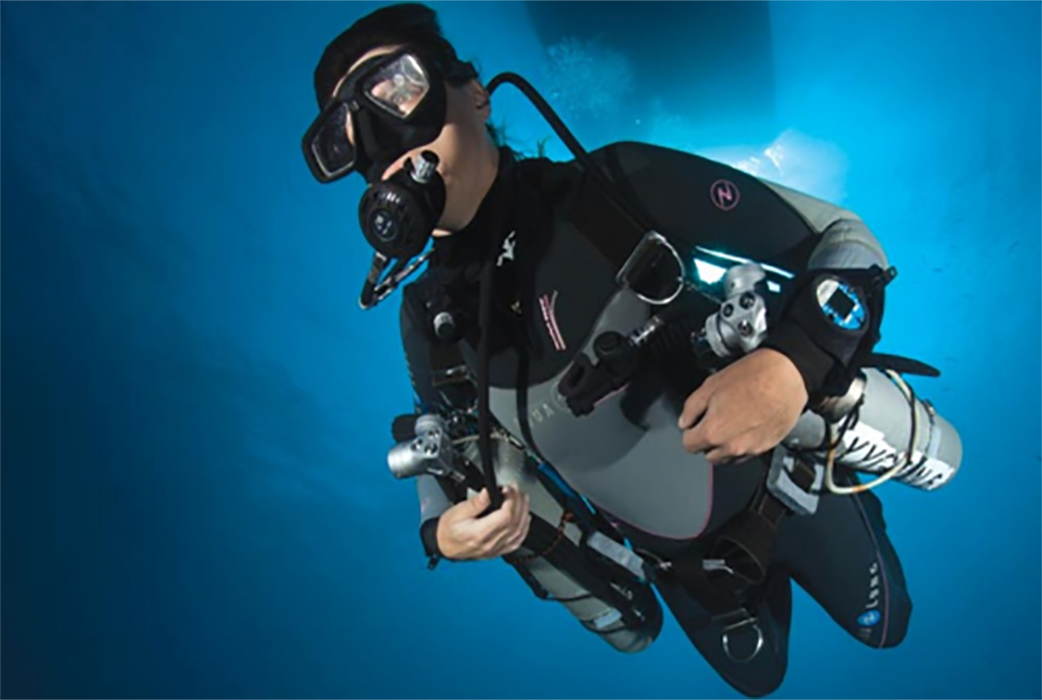
Move your tanks to your sides. Sidemount clips your cylinders alongside your body instead of on your back, for better trim, easy valve access, and two independent gas sources as built-in redundancy. It started in cave diving and is the foundation for a lot of technical diving. The SDI Sidemount course teaches you to configure and dive the system from the ground up, and it counts as a specialty toward your Advanced Diver rating. You'll need your own mask, fins, boots, and snorkel, plus your own fitted sidemount harness (we fit them in the shop), and cylinders, regulators, and the rest of the rental gear are provided.
Veterans can put their GI Bill toward their training, and families can use ESA or ClassWallet funds. See if you qualify.
Availability: Contact us for booking information
SDI Sidemount Diver Course
Standard scuba puts your tank on your back. Sidemount clips one or two cylinders to your sides instead, hanging along your body from shoulder to hip. It started in cave diving, where a streamlined profile matters for tight passages, and it's caught on in recreational diving for good reasons: better horizontal trim, valve access you can see and reach without twisting, and two independent gas sources that act as built-in redundancy. It's also the foundation for a lot of technical diving. The SDI Sidemount course teaches you to set up, configure, and dive the system from the ground up, and it counts as one specialty toward your SDI Advanced Diver rating.
Why divers go sidemount
Moving your tanks to your sides changes the dive:
- Better horizontal trim, for a more natural position in the water
- Both valves in front of you, reachable without twisting
- Two independent gas sources, so one failure doesn't end the dive
- A foundation for technical and cave diving down the road
Get fitted before class
One thing to sort out first: your sidemount harness. A harness is fitted specifically to your body, with D-ring positions, bungee length, and attachment points that take time to dial in and are personal to you. A loaner that isn't sized to you makes the course harder, so we strongly recommend coming with your own. We sell and fit harnesses in the shop, so call us at (480) 881-4013 before you enroll and we'll get you fitted and ready for your first session.
Who can enroll
Open to certified Open Water divers who want a more capable, redundant setup, or a path toward technical diving.
- Certified Open Water divers, or equivalent
- Minimum age 18, or 15 with parental consent
- Divers who want better trim and gas redundancy
- Anyone eyeing technical or cave diving later
✓ What's included
- A classroom and pool session, plus your open water dives
- Sidemount cylinders and regulators for the course
- Rental gear: BCD, tanks, weights, wetsuit, and computer
- Your SDI Sidemount certification, plus a credit toward your Advanced Diver rating
What to bring
- Your own mask, fins, boots, and snorkel (required, we don't rent these)
- Your own sidemount harness, fitted before class (strongly recommended, we fit them in the shop)
- Your Open Water certification card
- A swimsuit and a towel
Frequently Asked Questions
Let's. Go. Diving.
Sidemount starts with a harness fitting. Call the shop and we'll get you fitted and scheduled.
Call the shop (480) 881-4013A specialty course that counts toward the SDI Advanced Diver rating. Cylinders and regulators are provided; your own fitted sidemount harness is strongly recommended. Prerequisite: an SDI Open Water certification (or equivalent).
By booking, you agree to our Terms & Conditions.