• TDI KISS Air Diluent

TDI KISS Air Diluent

A closed circuit rebreather recycles your exhaled gas, scrubs the CO2, and maintains an optimum oxygen partial pressure throughout the dive. The result is extended bottom time, near-silent operation, and a breathing mix that adjusts automatically as you change depth. The TDI CCR Air Diluent Diver course is your first CCR certification, conducted on the KISS closed circuit rebreather to a maximum depth of 100 feet (30 metres) on no-decompression dives. Topics include rebreather history and mechanics, gas physiology, scrubber packing, electronic system monitoring, oxygen partial pressure management, dive planning, emergency procedures, and unit maintenance. Dive Arizona has KISS units available to rent for the course. If you already own a KISS CCR, bring it. Minimum age 18. TDI Nitrox Diver or equivalent required. 20 logged dives minimum. Course must be completed within 6 weeks of the start date.


Students must own their own mask, fins, and boots for this course.

All students receive a discount on product purchases during enrollment of any one of our courses!


Have Classwallet/ESA funds? Click Here.

Are you a Veteran with a GI Bill? Click here.


Starting from
$1249.00

Availability: Contact us for booking information

TDI KISS Air Diluent CCR Course


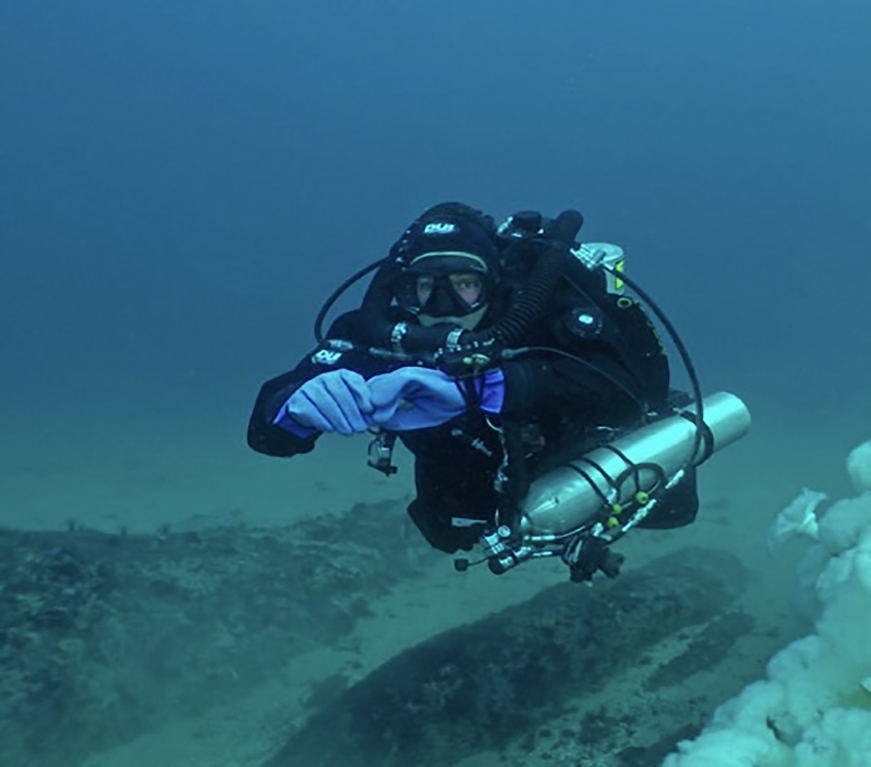
Open circuit scuba exhausts every breath you take into the water as bubbles. A closed circuit rebreather does the opposite: it captures your exhaled gas, scrubs the CO2 out of it, adds back the oxygen your body consumed, and feeds it to you again. The same gas loops through the system for the entire dive. Almost no bubbles leave the unit. The dive is nearly silent.

The practical effect is longer bottom time and a more optimized breathing mix. Think of it as a nitrox blending machine that adjusts to your depth automatically -- the unit maintains a constant partial pressure of oxygen regardless of whether you are at 30 feet or 90 feet. For photographers, wildlife divers, and anyone who has felt limited by NDLs or bubble noise, a CCR changes the experience of diving in ways that are genuinely hard to describe until you have done it.

The TDI CCR Air Diluent Diver course is your first CCR certification. It is conducted on the KISS closed circuit rebreather and qualifies you to dive the KISS CCR to a maximum depth of 100 feet (30 metres) on no-decompression dives. Dive Arizona has KISS units available to rent for the course. Call us at (480) 881-4013 for current availability and rental details.


Who This Course Is For


  • Underwater photographers who want longer bottom time and no bubbles disturbing the subjects they are shooting
  • Wildlife-focused divers who want to get closer to marine life without the noise and bubble disturbance of open circuit scuba
  • Technical divers and advanced recreational divers who want to add CCR as a configuration to their diving


How a Closed Circuit Rebreather Works


A CCR has three main components that work together: a breathing loop, a scrubber canister, and an oxygen injection system.

The Scrubber

Every breath you exhale contains CO2. On open circuit scuba, that CO2 vents into the water as bubbles. On a CCR, the exhaled gas passes through a canister packed with a chemical absorbent -- the scrubber -- that removes the CO2 before the gas re-enters the breathing loop. Packing the scrubber correctly is a critical skill and one of the first things covered in this course. An improperly packed scrubber can allow CO2 to pass through, which creates a serious risk called a CO2 breakthrough.

Oxygen Injection and Set Point Management

As you breathe on a CCR, your body consumes oxygen. The unit monitors the partial pressure of oxygen in the loop using oxygen sensors and injects oxygen to maintain a preset level called the set point. On the KISS CCR, this is managed electronically. The course covers how to monitor the system, how to switch set points at different depths, and how to recognize and respond to sensor failures.

CNS Oxygen Tracking

Because a CCR maintains elevated oxygen levels throughout the dive, tracking central nervous system (CNS) oxygen exposure is more important than on standard scuba. High oxygen partial pressures over time can cause CNS oxygen toxicity, which can result in seizures underwater. The course covers CNS percentage calculation and tracking, with a recommended maximum of 80 percent of the total CNS limit per dive. Managing this is a routine part of CCR dive planning.


What the Course Covers


Rebreather Theory and System Knowledge

The academic portion covers the history and evolution of rebreather technology, a comparison of open circuit, semi-closed, and closed circuit systems with the advantages and limitations of each, the practical mechanics of the KISS CCR specifically, and gas physiology relevant to CCR diving including oxygen toxicity, hypoxia, hypercapnia, and CO2 breakthrough. Dive tables and computer use on a CCR are also covered, along with dive planning procedures specific to closed circuit diving.

Unit Operation and Maintenance

You will learn to build up and break down the KISS CCR, pack the scrubber canister correctly per manufacturer specifications, verify diluent and oxygen contents using an analyzer before every dive, and complete a thorough predive checklist. Post-dive cleaning and diver-level unit maintenance are also covered. A CCR requires more pre- and post-dive attention than open circuit scuba, and that discipline is built into the course from the first session.

Dive Planning and Emergency Procedures

CCR dive planning covers oxygen partial pressure limits, CNS tracking across multiple dives in a day, depth and time planning within no-decompression limits, and contingency planning for unit malfunctions. Emergency procedures are a significant part of the course and include responses to a failed oxygen sensor, loop contamination, CO2 breakthrough symptoms, and bailout to open circuit -- the procedure for switching to a backup open circuit regulator if the CCR cannot be used to continue the dive.


In-Water Skills and Dive Requirements


Open water dive requirements for the course:

  • All dives between 30 and 100 feet (9 to 30 metres)
  • Minimum two dives deeper than 50 feet (20 metres)
  • Minimum one dive deeper than 90 feet (27 metres)
  • All dives completed within CNS percentage limits, recommended maximum 80 percent
  • Oxygen partial pressure not to exceed manufacturer recommendation or 1.3 working limit


Required skill demonstrations include:

  • Unit build-up and predive checks before every dive
  • Diluent and oxygen verification using an analyzer
  • Descent with leak and bubble check stop at 10 to 20 feet (3 to 6 metres)
  • Electronic system monitoring for oxygen partial pressure levels and set point management
  • Set point switching at depth
  • Buoyancy control using BCD and loop breathing volume management
  • Lift bag or SMB deployment with reel where appropriate
  • Safety stops at predetermined depths on ascent
  • Constant loop volume management throughout all dives
  • Emergency procedure demonstrations including bailout to open circuit
  • Post-dive unit cleaning and diver-level maintenance after every dive


Course Timeline and Currency Requirements


Two requirements specific to this course that do not apply to other programs on this site:

  • The course must be completed within 6 weeks of the start date. Plan your schedule before you enroll.
  • If you are inactive on the KISS CCR for more than 6 months after completing the course, a refresher course is required before diving the unit again. CCR skills degrade faster than open circuit skills and currency matters.


Who Can Enroll


Prerequisites that must be met before the start of the course:

  • Minimum age 18
  • TDI Nitrox Diver certification or equivalent from a TDI-recognized agency
  • Proof of 20 logged open water dives


The KISS CCR and Equipment


This course is conducted on the KISS closed circuit rebreather specifically. KISS is a manufacturer known for producing mechanically simple, reliable CCR units. The certification you earn is unit-specific to the KISS CCR.

Dive Arizona has KISS units available to rent for students taking this course. Unit rental is an additional cost on top of the course fee. Call us at (480) 881-4013 for current availability and to confirm your rental before enrolling.

If you already own a KISS CCR, bring it. Training on your own unit is always the better option since you will be using that exact configuration on every future dive. If you are considering purchasing a KISS CCR, stop by the shop and we can talk through the options before the course.

Students are required to own their own mask, fins, boots, and snorkel. If you need any other equipment, we carry a full selection in the shop and all students enrolled in a course receive a discount on purchases during enrollment.


Frequently Asked Questions


What is a closed circuit rebreather?

A closed circuit rebreather is a diving system that recycles your exhaled gas rather than venting it into the water. The exhaled gas passes through a scrubber canister that removes CO2, then oxygen is injected to replace what your body consumed, and the gas is fed back to you to breathe again. Almost no bubbles exit the unit. The system maintains a constant optimal oxygen partial pressure regardless of depth, which extends no-decompression limits and makes the breathing mix more efficient than open circuit scuba.

What is the KISS rebreather?

KISS is a Canadian CCR manufacturer known for building mechanically reliable, relatively simple closed circuit units. The KISS CCR is electronically controlled and well regarded in the technical diving community. The TDI CCR Air Diluent certification earned in this course is specific to the KISS unit -- diving a different CCR model requires separate training on that unit.

How long does the TDI CCR Air Diluent course take?

The course must be completed within 6 weeks of the start date. The actual time spent depends on scheduling and individual progress. Call us at (480) 881-4013 to discuss what a realistic timeline looks like and how to structure the course around your schedule.

What are the advantages of rebreather diving?

Three main advantages over open circuit scuba. First, extended bottom time -- because the unit maintains an optimized oxygen level at every depth, no-decompression limits are significantly longer than on open circuit. Second, near-silent operation, almost no bubbles exit the unit, which means marine life is less disturbed and photographers get closer to their subjects. Third, gas efficiency, the same gas is recycled throughout the dive rather than being exhausted with every breath.

Do I need to own a KISS CCR to take this course?

No. Dive Arizona has KISS units available to rent for the course at an additional cost. Call us at (480) 881-4013 for current availability and rental details before enrolling. If you already own a KISS CCR, bring it, training on your own unit produces better outcomes since you will use that exact configuration on every future dive.

What is a scrubber and why does it matter?

The scrubber is a canister packed with a chemical absorbent that removes CO2 from your exhaled gas before it re-enters the breathing loop. It is what makes closed circuit rebreather diving possible. An improperly packed scrubber can allow CO2 to pass through into the breathing loop -- a condition called CO2 breakthrough that causes rapid incapacitation. Correct scrubber packing is one of the first and most emphasized skills in this course.


Ready to Try Rebreather Diving?


Call us at (480) 881-4013 to discuss the course, confirm unit rental availability, and get on the schedule. We are open Monday through Saturday 11am to 6pm and Sunday 11am to 5pm, at 18618 S 186th Way, Queen Creek, inside The Shooting Range.


For more information and to see course standards, click here!

0 reviews for TDI KISS Air Diluent(Course Group)

Write a review

re-CaptchaCan't read? Reload
top