Diving in Proco Island, Indonesia
Amanda Krugen May 27, 2026
Diving in Proco Island, Indonesia
Written by Amanda Krugen
A Hidden Gem in Indonesia...
Most certified divers have Komodo on their bucket list. A lot have done Raja Ampat. A much smaller number have heard of Proco Island and an even smaller number have actually dived it. I'm in that last group, and I want to tell you what you're missing.
Proco Island sits in South Halmahera, in the far eastern reaches of the Indonesian archipelago. It's not easy to get to. There's exactly one resort on the island. The name doesn't appear in most "best diving in Indonesia" roundups. And that, honestly, is what makes it extraordinary.
This guide is written for certified divers who are weighing whether Proco is worth the journey, the logistics, the conditions, the marine life, and the honest comparison to Indonesia's better-known dive destinations. Short answer: yes. Here's the long answer.
Where Is Proco Island? Understanding the Geography
Proco Island is located in the Patinti Strait in South Halmahera, part of North Maluku province in eastern Indonesia. Halmahera itself is one of the largest islands in the Maluku archipelago and sits squarely within the Coral Triangle, the global center of marine biodiversity, which Indonesia shares with the Philippines, Malaysia, Papua New Guinea, the Solomon Islands, and Timor-Leste.
The Patinti Strait is the geographic key to why this area dives so well. The islands of Sali, Kusu, Proco, and Gala stretch across the strait at its narrowest point, forcing ocean water through several channels and creating the current-driven conditions that healthy coral thrives in.
40+
Named dive sites
450+
Coral species
800+
Fish species
40m
Max visibility
How to Get to Proco Island
Getting to Proco requires commitment. The most efficient routing is to fly into Manado (Sam Ratulangi International Airport) in North Sulawesi, then take a connecting flight via Wings Air to Labuha on the island of Bacan in South Halmahera.
What the Diving Is Actually Like at Proco Island
The first thing I noticed when I dropped in was the color. Not the fish, the coral. The reef around Proco is healthy in a way that's become increasingly rare in high-traffic Indonesian dive destinations. No bleaching scars, no broken table coral from careless fin kicks, no anchor damage. Because so few divers have been here, the reef looks the way reefs used to look everywhere before mass dive tourism arrived.
The dive sites range from coral gardens and drop-offs to sandy muck slopes and current-swept pinnacles. The house reef alone stretches nearly a kilometer and can keep you occupied for multiple dives without repeating yourself. The variety is genuinely impressive, you can go wide-angle on a schooling fish aggregation in the morning and switch to macro photography in the afternoon and feel like you're diving two different oceans.
Halmahera is an undiscovered gem in Indonesia's Coral Triangle, pristine reefs, dramatic underwater topography, and biodiversity that rivals anything in the region.
Night dives here are particularly memorable. Walking sharks, the epaulette shark, are commonly sighted moving across the reef in the dark, a behavior that feels almost prehistoric. The combination of accessible night diving off the house reef and knowledgeable local guides makes this one of the best night diving setups I've encountered anywhere in Southeast Asia.
Marine Life You Can Expect to See
Proco's marine life spans both ends of the size spectrum. On the macro side, the region is exceptional:
- - Rhinopias (rare scorpionfish, a bucket-list sighting for underwater photographers)
- - Pygmy seahorses on sea fans
- - Blue-ringed octopus
- - Harlequin shrimp
- - Nudibranchs
- - Frogfish
- - Pipefish and ghost pipefish
On the pelagic and wide-angle side:
- - Reef sharks (regularly sighted in the channels)
- - Bumphead parrotfish in schools
- - Napoleon wrasse
- - Schooling barracuda and giant trevally
- - Eagle rays
- - Occasional manta rays
- - Dolphins, dugongs, and seasonal whale sightings on the surface
Visibility, Currents, and Conditions
Visibility ranges from 15 meters (50 feet) on the lower end to an impressive 40 meters (130 feet) on good days. The Patinti Strait produces currents that can be strong, this is not a destination for brand-new certified divers. The resort itself recommends at least 50 logged dives, and that's honest advice. Experienced divers comfortable with drift diving will find the currents exhilarating rather than stressful. The protected bay location means the resort can operate dive boats year-round, even during the wetter months when surface conditions elsewhere can shut operations down.
Proco Island vs. Komodo and Raja Ampat: Is It Worth the Journey?
This is the question most certified divers will ask, so let's answer it directly.
Raja Ampat is widely considered the world's most biodiverse marine environment. It deserves the reputation. But it also now receives tens of thousands of divers per year, liveaboard traffic has grown significantly, and the most famous sites, Misool, Cape Kri, Pianemo, are regularly crowded. Komodo is stunning but increasingly impacted by tourism pressure and live-aboard scheduling that means you're often diving with multiple other groups on the same site.
Proco is different in one fundamental way: you will almost certainly be the only divers on every site, every dive. The reef hasn't absorbed the pressure those destinations have. The experience is more intimate, more raw, and, for divers who value exclusivity and pristine conditions, arguably better.
The trade-off is logistics. Proco requires more flights, more time, and more planning than either Komodo or Raja Ampat, which both have established liveaboard and resort infrastructure. If you're optimizing for ease, go to Raja Ampat. If you're optimizing for a once-in-a-career diving experience on reefs that feel untouched, Proco Island is the choice.
Where to Stay: Proco Island Bambu Resort
There is one resort on Proco Island: Proco Island Bambu Resort. It opened in March 2023, built by dive pioneer Rudy Ring, who first explored the South Halmahera diving area in 2009 with a liveaboard and spent years developing and naming the dive sites before establishing a permanent base on the island.
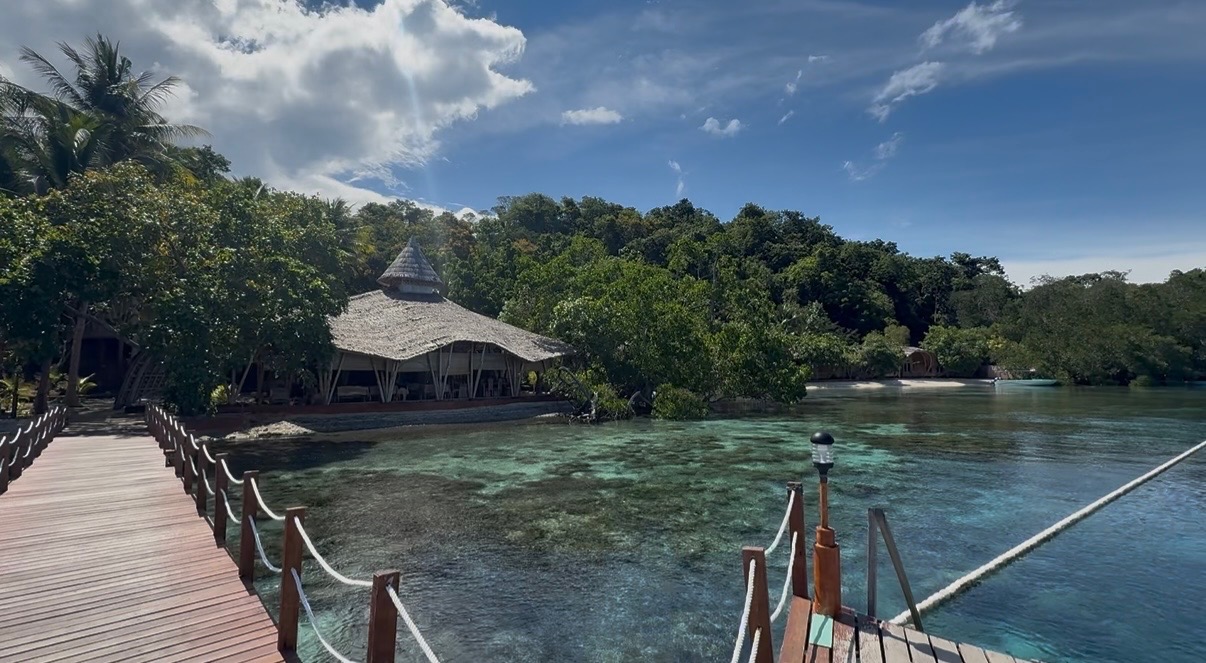
The resort consists of 12 bamboo cottages and two private villas, constructed almost entirely from bamboo using traditional design methods. The aesthetic is genuinely beautiful, not "rustic" in the sense of rough, but deliberate and refined. Beachfront cottages have direct sea views; all have air conditioning and private terraces.
The dive center is steps from the water and fully equipped, nitrox fills available for certified divers, full equipment rental on-site (though bringing your own gear is recommended), and guided night dives are arrangeable on request. The on-site restaurant serves a mix of Indonesian and international cuisine with a daily-changing menu, and the sunset bar on the hillside is, frankly, one of the better spots to end a dive day that I've encountered anywhere.
Best Time to Dive Proco Island
Proco Island Bambu Resort operates year-round, thanks to its protected bay location. The rainy season (roughly November through March) can bring windier surface conditions but also delivers some of the best underwater visibility of the year, and fewer visiting divers. The dry season (April through October) offers calmer surface conditions and is the more popular booking window. Both seasons produce excellent diving. For underwater photographers chasing the clearest water and calmest entry conditions, the shoulder months of April-May and September-October offer a strong combination of both.
Who Is Proco Island Best For?
Proco Island is best suited for certified divers with meaningful open-water experience, the resort's own guideline of 50+ logged dives is a sensible benchmark. The currents in the Patinti Strait can be strong and variable, and the remote location means there's no hyperbaric chamber nearby, so conservative dive profiles and experienced dive management matter more here than at established resort destinations.
It is ideal for underwater photographers, both macro and wide-angle. It's ideal for experienced divers who have done the "classics" and want something genuinely different. And it's ideal for anyone who values having pristine, uncrowded reefs to themselves. It is not ideal for newly certified divers looking for calm, shallow, forgiving conditions.
FAQ: Diving Proco Island, Indonesia
Where is Proco Island located?
South Halmahera, North Maluku province, Indonesia.
How many dive sites are there?
More than 40 named dive sites plus an extensive house reef.
What marine life can you see?
Reef sharks, bumphead parrotfish, Rhinopias, pygmy seahorses, nudibranchs, manta rays, dolphins, and more.
What experience level is recommended?
At least 50 logged dives due to currents and the remote location.
How does it compare to Raja Ampat and Komodo?
Comparable biodiversity with dramatically fewer divers and significantly less tourism pressure.
Ready to dive Proco Island? Join one of our small-group trips.
We run guided group dive travel to destinations like Proco Island for certified divers who want expert logistics, vetted operators, and fellow divers who take underwater photography seriously.