Full Face Masks for Diving: Ocean Reef vs OTS
Amanda Krugen Jul 28, 2026
Full Face Masks for Diving: Ocean Reef vs OTS
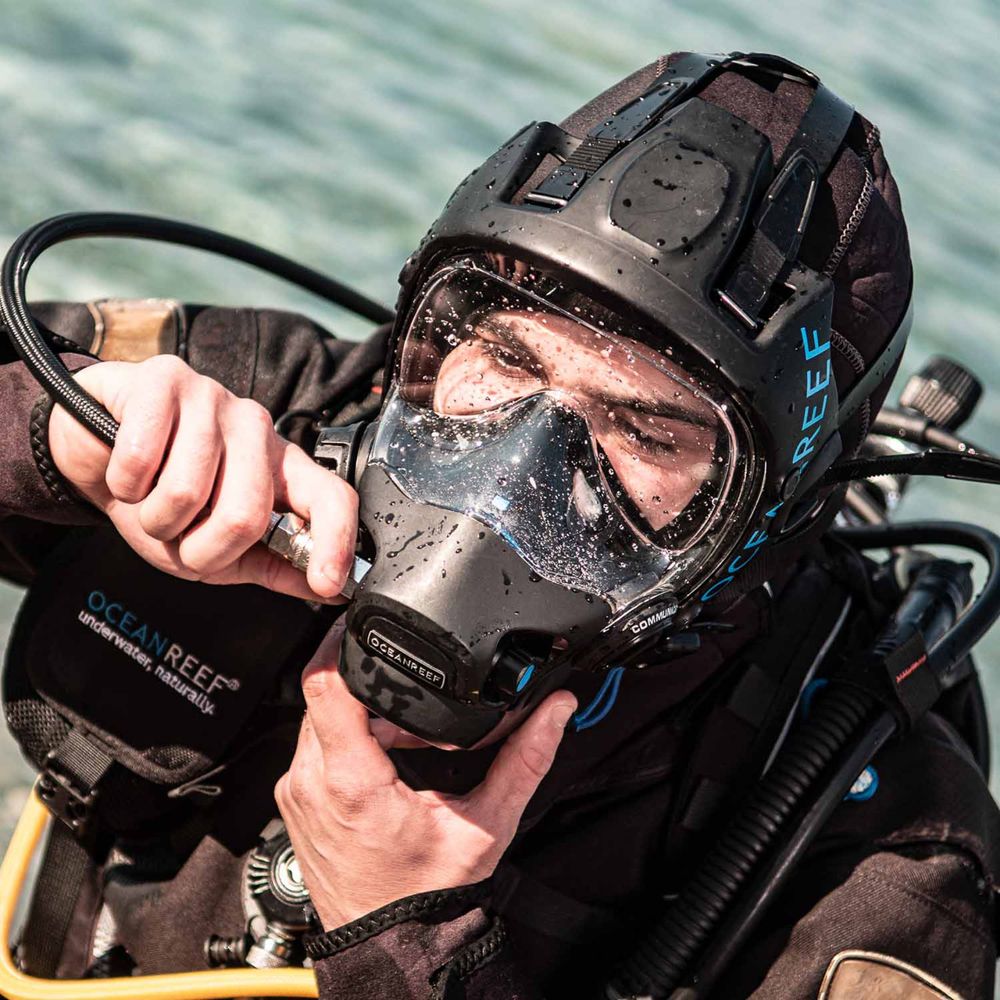
The first time you breathe through a full face mask, the whole dive changes. Your nose is inside the mask with the rest of your face, so you breathe naturally instead of clamping a mouthpiece between your teeth, and if you add communications you can talk to your buddy underwater. Divers come into the shop in Queen Creek curious about them all the time, usually after a cold Lake Pleasant dive left their jaw aching, or after they watched a dive show where everyone was chatting through their masks. So let's walk through what a full face mask does well, where it asks something of you in return, and how the two brands we get asked about most, Ocean Reef and OTS, stack up.
What a full face mask is
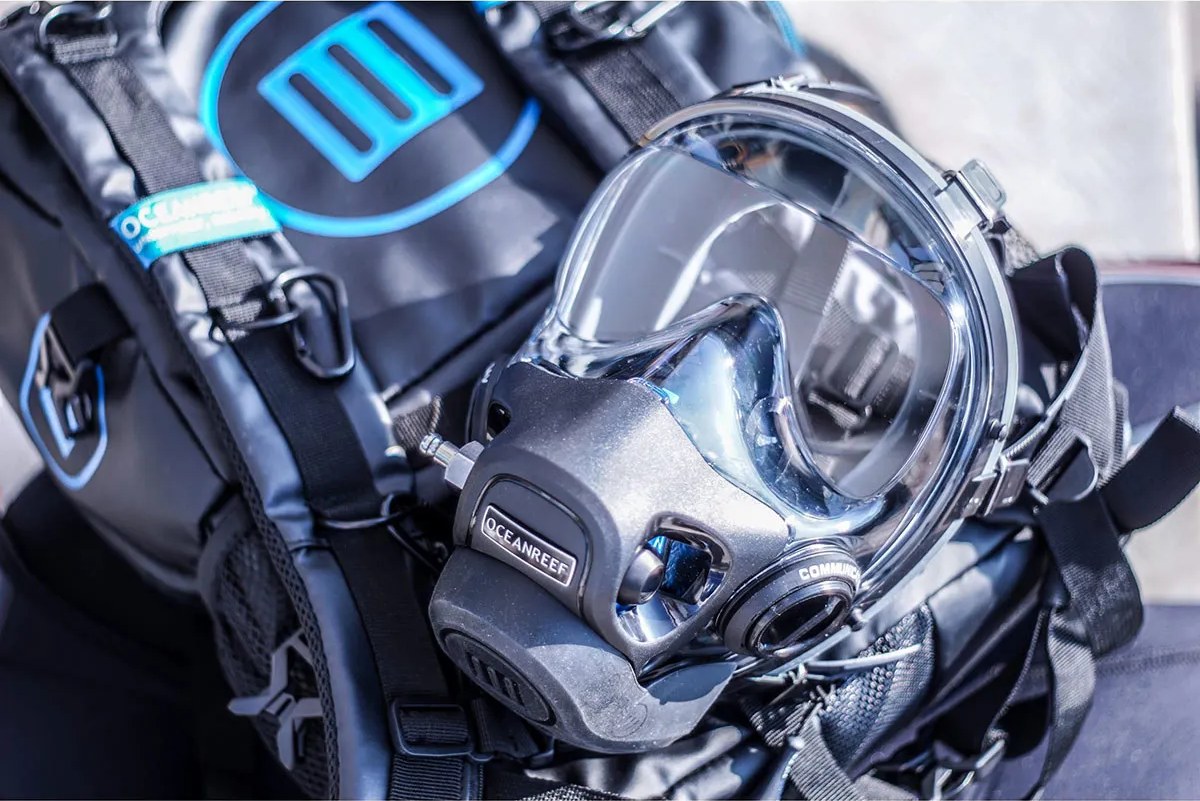
A standard scuba setup covers your eyes and nose and leaves you biting a regulator. A full face mask seals around your whole face, covers your eyes, nose, and mouth together, and holds the regulator in place inside a sealed pocket so you're never gripping anything with your teeth. Ocean Reef calls their version an IDM, an Integrated Diving Mask, because the second stage is built right into the mask body. Either way, the payoff is warmth on your face, air you breathe through your nose, and a platform that bolts on wireless or hardwire comms so you can hold an actual conversation at depth.
The pros and the tradeoffs
|
What you gain Natural nose breathing, no jaw fatigue, a warm sealed face in cold water, better vision from a big single lens, and the option to talk to your buddy or the surface through comms. |
What it asks of you A higher price than a standard mask and regulator, more bulk in your gear bag, a different equalizing technique, and emergency skills you practice on purpose rather than assume. |
For a lot of divers the comfort alone sells it. Nose breathing feels normal, your jaw isn't working all dive, and there's no cold water rushing past a mouthpiece. In cold or low-visibility water the sealed face makes a real difference, which is why it shows up so often on wreck, search and recovery, and public-safety dives. Add a comms unit and you can guide a student, coordinate a team, or narrate for a camera without hand signals. It's the same reason the full face mask is a favorite for night and limited-visibility diving, where staying in contact matters more than usual.
None of that is free. Equalizing takes a slightly different technique since you can't just pinch your nose, and ditching to a backup regulator and clearing a flooded mask are things you practice deliberately. That's the whole point of the SDI Full Face Mask Diver Course, and it's why we don't just hand one over and wave you toward the lake. Get an hour of pool time with an instructor first and every one of these tradeoffs turns into a non-issue.
Ocean Reef
Ocean Reef is the Italian-designed name most recreational divers land on, and their masks are known for a wide field of vision and a coated visor that resists scratches inside and out.
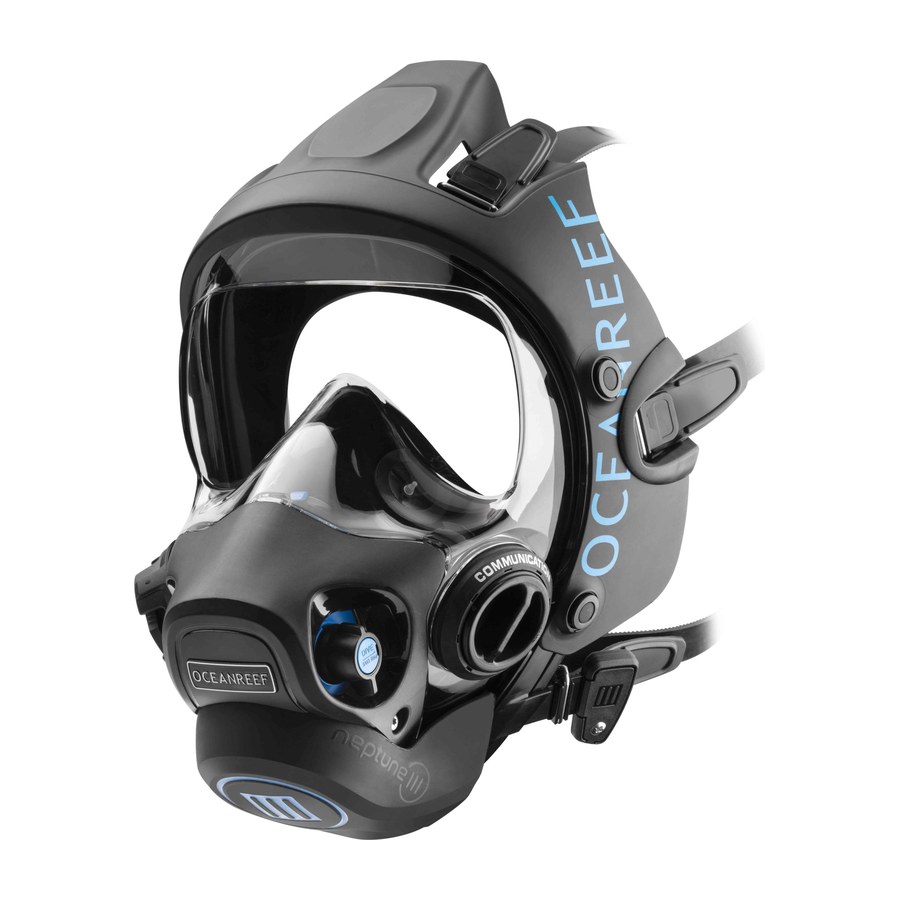
Neptune III colors and editions
 Black Black |
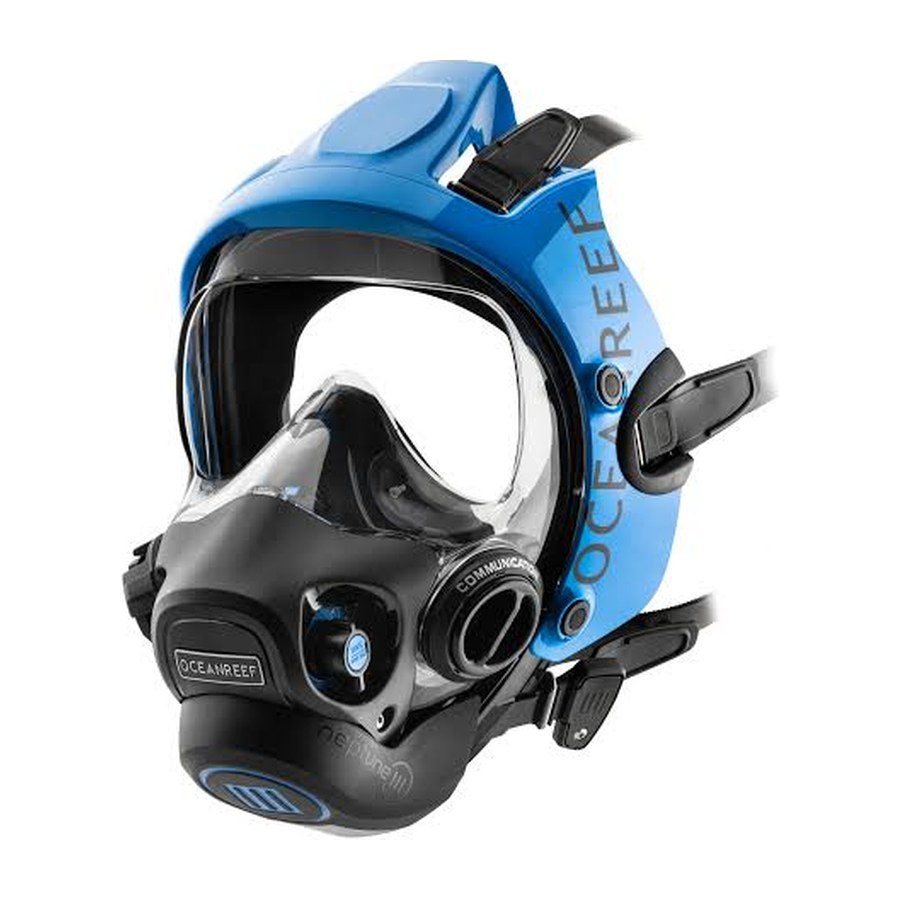 Blue Blue |
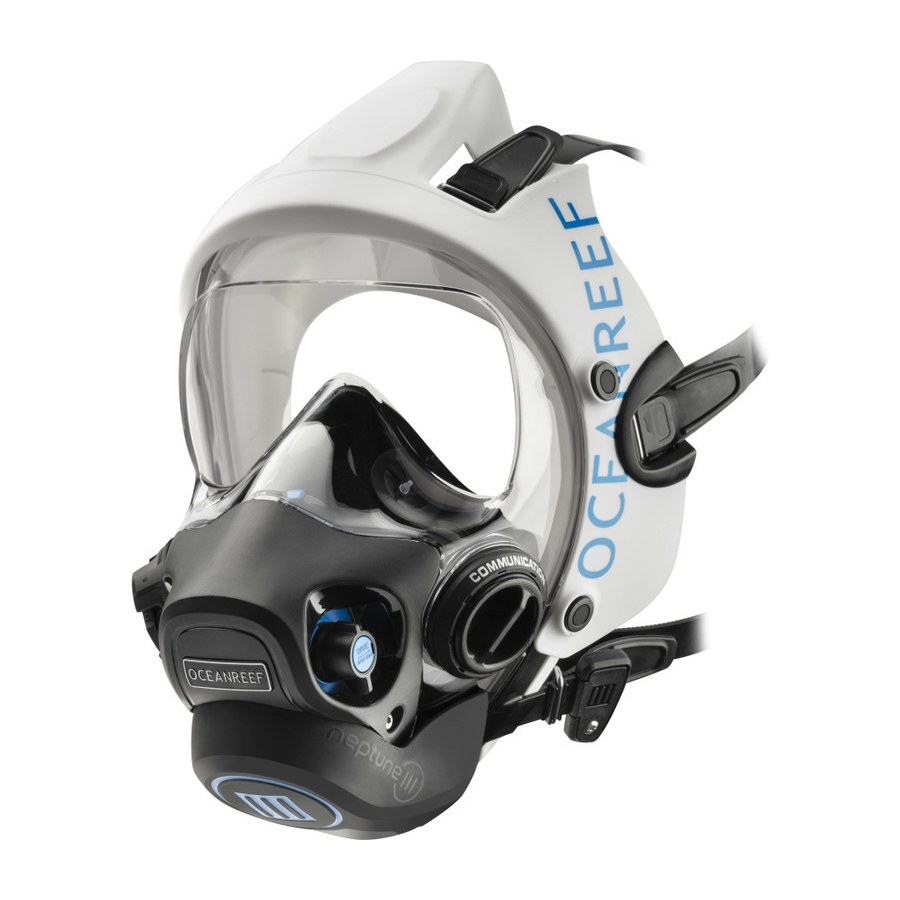 White White |
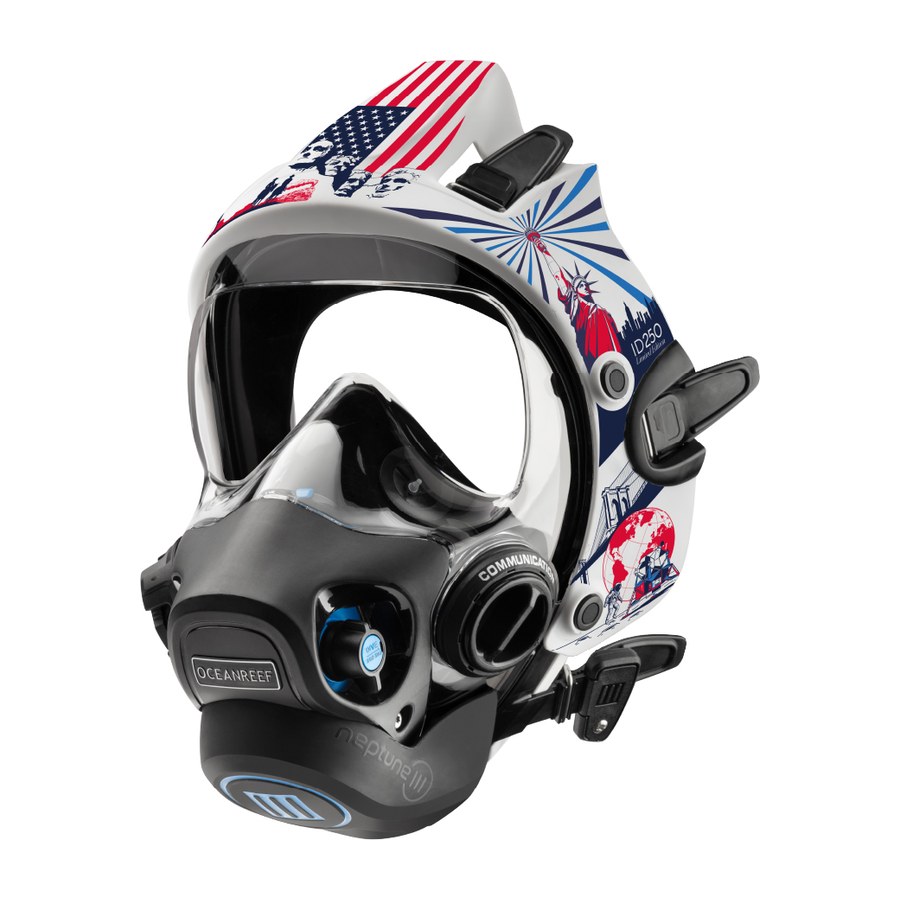 ID250 special edition ID250 special edition |
The Neptune III is the current flagship, with a fully integrated second stage that now detaches for servicing, a one-hand doffing design, and a panoramic visor. It comes in black, white, and blue in sizes S/M and M/L, with limited runs like the ID250 special edition for anyone who wants their mask to stand out on the boat. The Neptune Space G.divers is the friendlier way in, a simpler IDM at a lower price that still takes the same comms and accessories, so it's a common first mask for someone certifying and wanting to grow into it. Above both sits the Predator, built to commercial-diving standards for people who are in the water for a living.
OTS (Ocean Technology Systems)
OTS is the American-made counterpart, built in Santa Ana, California, and they come at it from the communications side first, which is why you see their masks on so many public-safety and commercial teams. These are the two we keep in the rental fleet.

The Guardian is the workhorse, rugged, comms-ready, and easy to service, and it's the one most teams standardize on. It comes in a surprising range of skirt and hardware colors, and that high-visibility yellow is popular with instructors and safety divers who want to be seen.
Guardian color options
 Black / Black Black / Black |
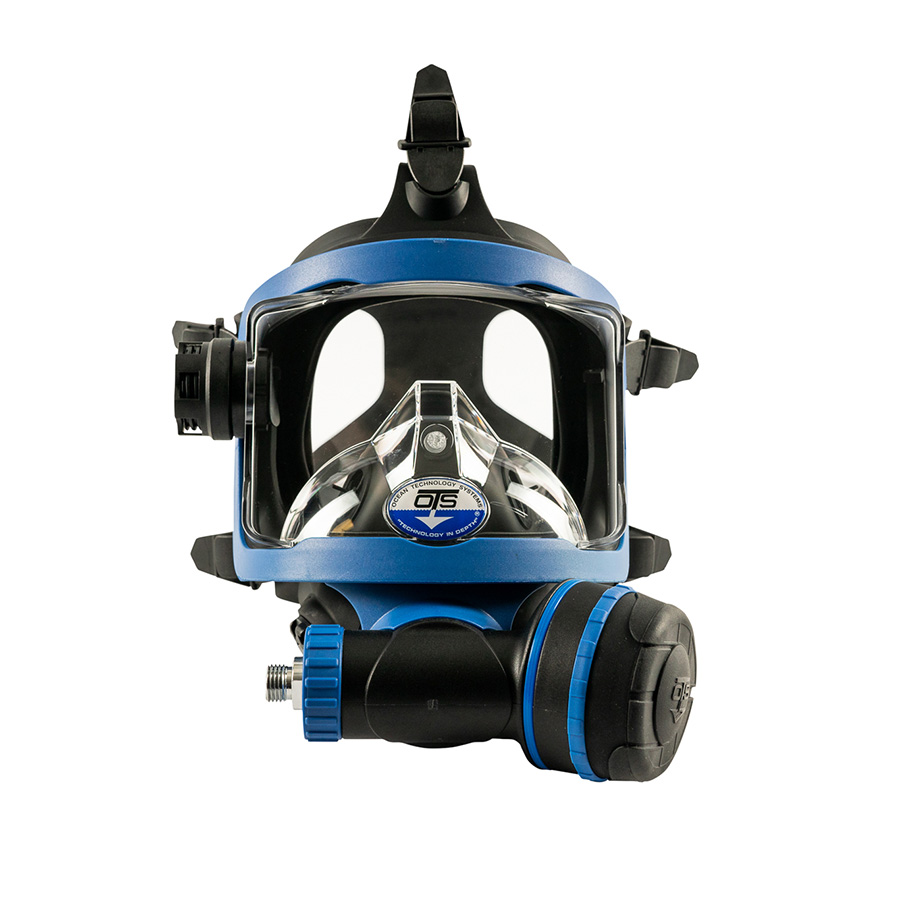 Black / Blue Black / Blue |
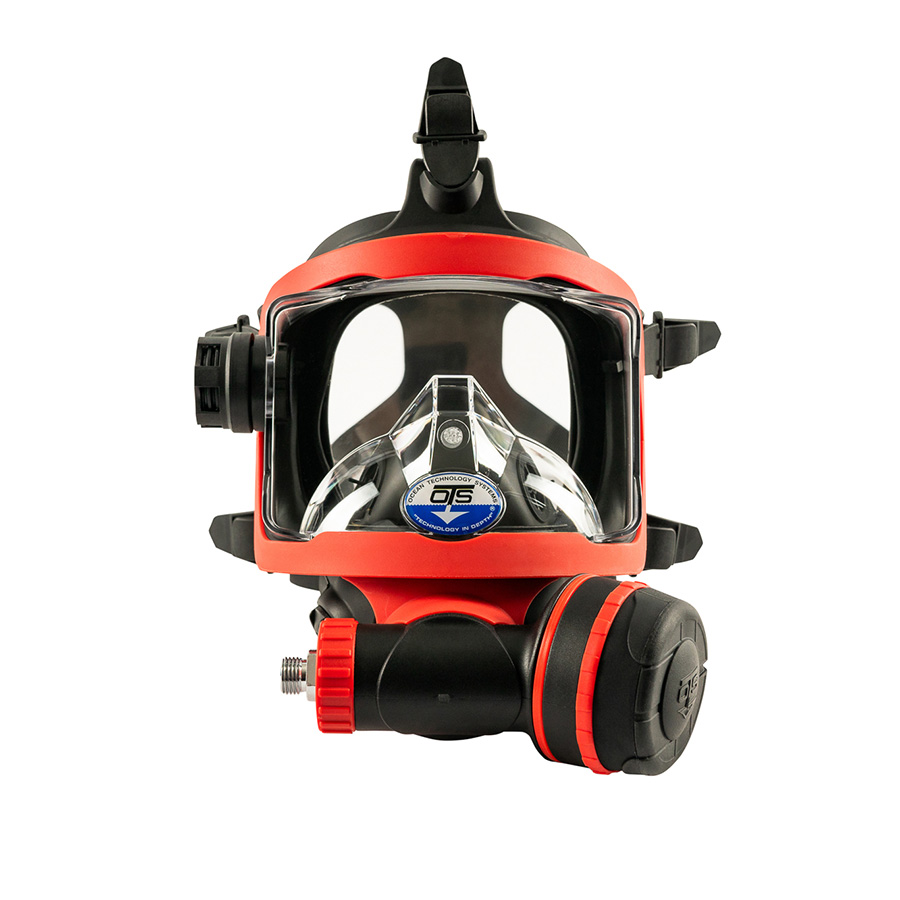 Black / Red Black / Red |
|
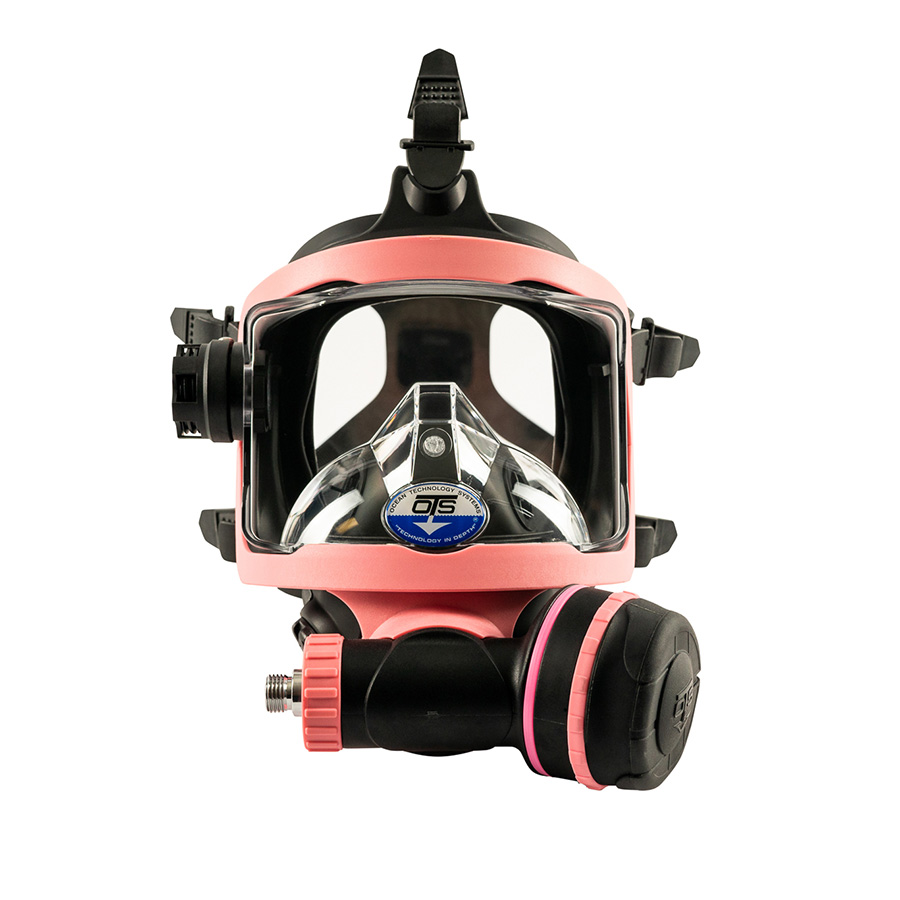 Black / Pink Black / Pink |
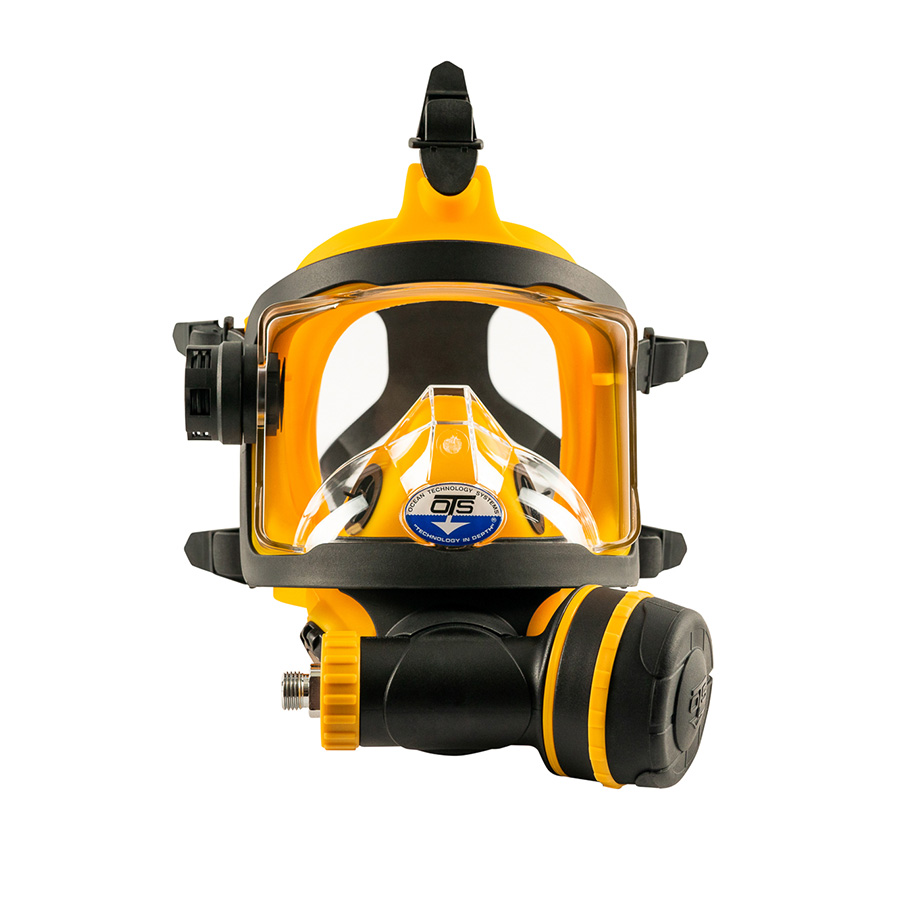 Yellow / Black Yellow / Black |
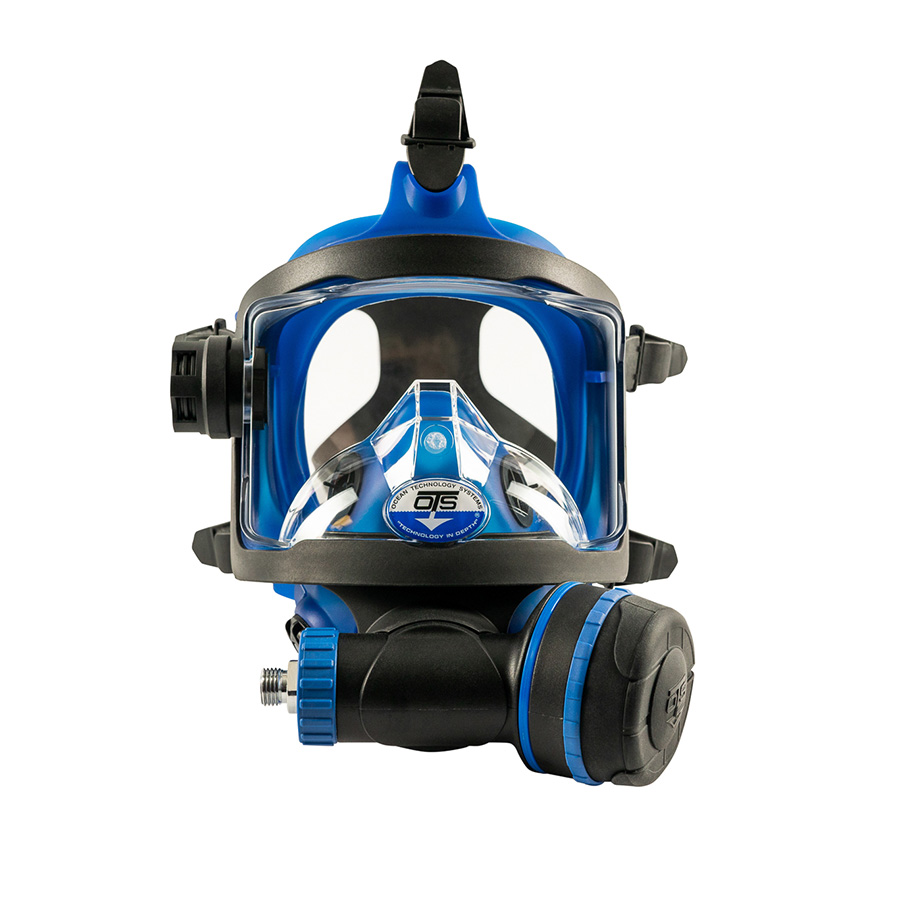 Blue / Black Blue / Black |
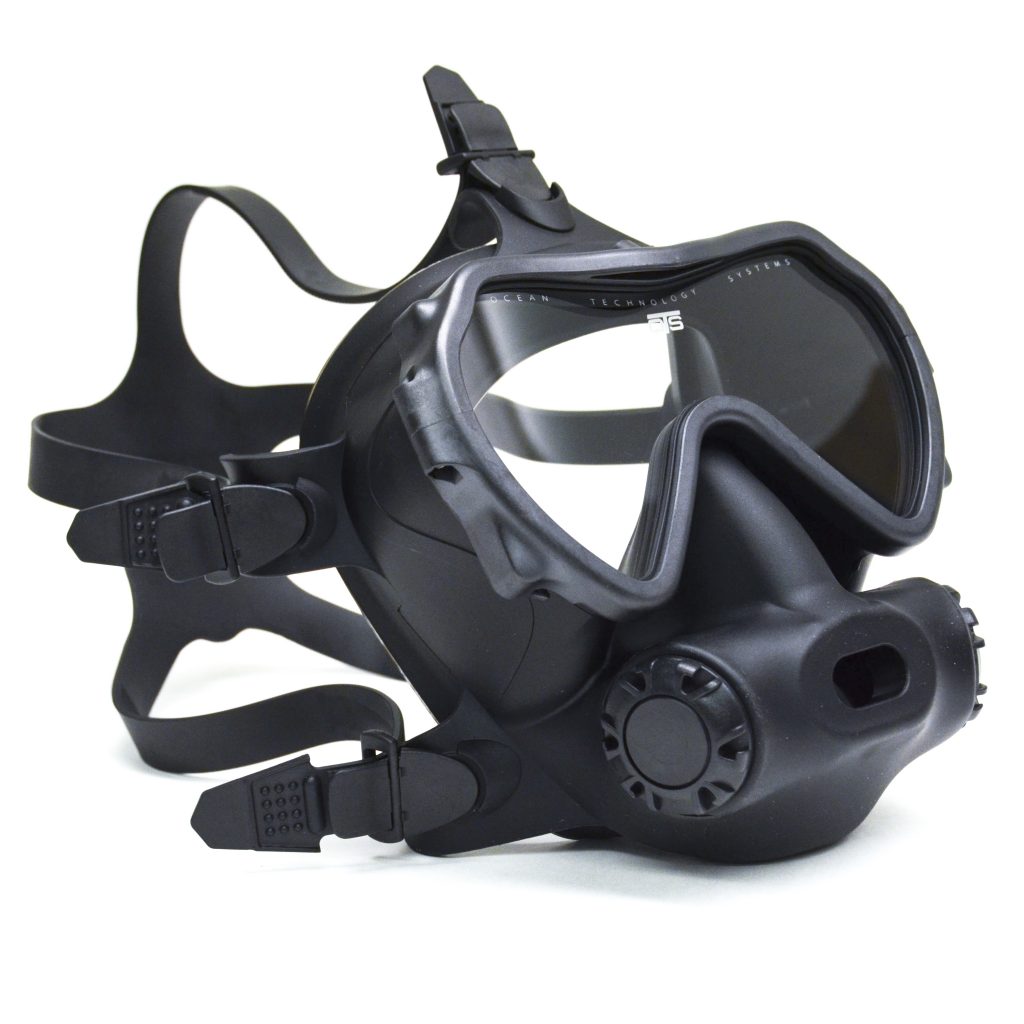
The Spectrum is the budget-conscious, build-it-your-way option. It lets you keep your own second-stage regulator instead of buying into a proprietary one, it's light enough to travel with, and it offers two skirt colors and two lens options so you can spec it to taste.
Ocean Reef vs OTS at a glance
| Ocean Reef | OTS | |
|---|---|---|
| Best known for | Wide field of vision, coated visor | Communications, serviceability |
| Top models | Neptune III, G.divers, Predator | Guardian, Spectrum |
| Colors | Black, white, blue, plus special editions | Six Guardian skirt/hardware combos, custom Spectrum |
| Use your own regulator | No, integrated second stage | Yes on the Spectrum |
| Made in | Italy | USA |
So which one should you get
If you want the widest view and the most polished recreational package, the Ocean Reef Neptune III is hard to beat, and the G.divers is the value pick in that family. If communications are the reason you're here, or you want to bring your own regulator and keep the cost down, OTS is the practical call, with the Guardian for durability and the Spectrum for flexibility. Color is more than looks too, that high-vis yellow Guardian earns its keep in murky water.
Try before you buy
The smartest first move isn't a purchase at all. Take the Full Face Mask course, borrow an OTS or Ocean Reef mask from our rental fleet, and dive a couple of tanks in one before you spend a dollar. You'll know within a dive whether the full face life is for you, and if it is, we'll help you match a mask and get it fitted. Come say hi at the shop and we'll get you sorted.
Frequently Asked Questions
Do I need special training to dive a full face mask?
Yes, and it's worth it. The SDI Full Face Mask Diver Course covers equalizing, clearing, and switching to a backup regulator, which are the skills that feel different from a standard mask. It's a short specialty, usually a pool session plus knowledge review, and it makes the whole experience comfortable from your first real dive.
Can I talk to other divers with a full face mask?
You can, with an add-on communications unit. Both Ocean Reef and OTS masks accept wireless or hardwire comms, letting you speak to another diver in a compatible mask or to the surface. The mask itself doesn't include comms by default, so it's a separate piece you add based on how you dive.
What colors do these masks come in?
The Ocean Reef Neptune III comes in black, white, and blue. The OTS Guardian offers a black skirt with black, blue, red, or pink hardware, plus blue and high-visibility yellow skirt options. The OTS Spectrum is customizable with two skirt colors and two lens choices. High-vis yellow is a favorite for instructors and safety divers who want to stand out in the water.
Is a full face mask good for cold water?
It's one of the best reasons to use one. Sealing your whole face keeps cold water off your skin and lets you breathe through your nose, which many divers find far more comfortable in Arizona's cooler lakes and at altitude. It pairs naturally with a dry suit for the coldest conditions.
How much does a full face mask cost?
Recreational full face masks generally run several hundred dollars and up, more than a standard mask and regulator, with price climbing as you add communications and accessories. The OTS Spectrum is built to be the value option since you can use your own regulator, while flagship models like the Ocean Reef Neptune III sit at the higher end. Renting one first is the cheapest way to decide.
Can I rent a full face mask before buying?
Yes. We keep both OTS masks, the Guardian and Spectrum, and Ocean Reef masks in our rental fleet, so you can take the course, dive a full face mask in real conditions, and figure out whether it's right for you before committing to a purchase. Renting one of each is also the easiest way to feel the difference between the two brands. Most divers find this saves them from guessing on an expensive piece of gear.
Which is better, Ocean Reef or OTS?
Neither is better across the board, they're built for slightly different divers. Ocean Reef leads on field of vision and a refined recreational package. OTS leads on communications, serviceability, and the option to keep your own regulator. The best choice depends on how you dive, which is exactly what we help you sort out in the shop.
Lets. Go. Diving.